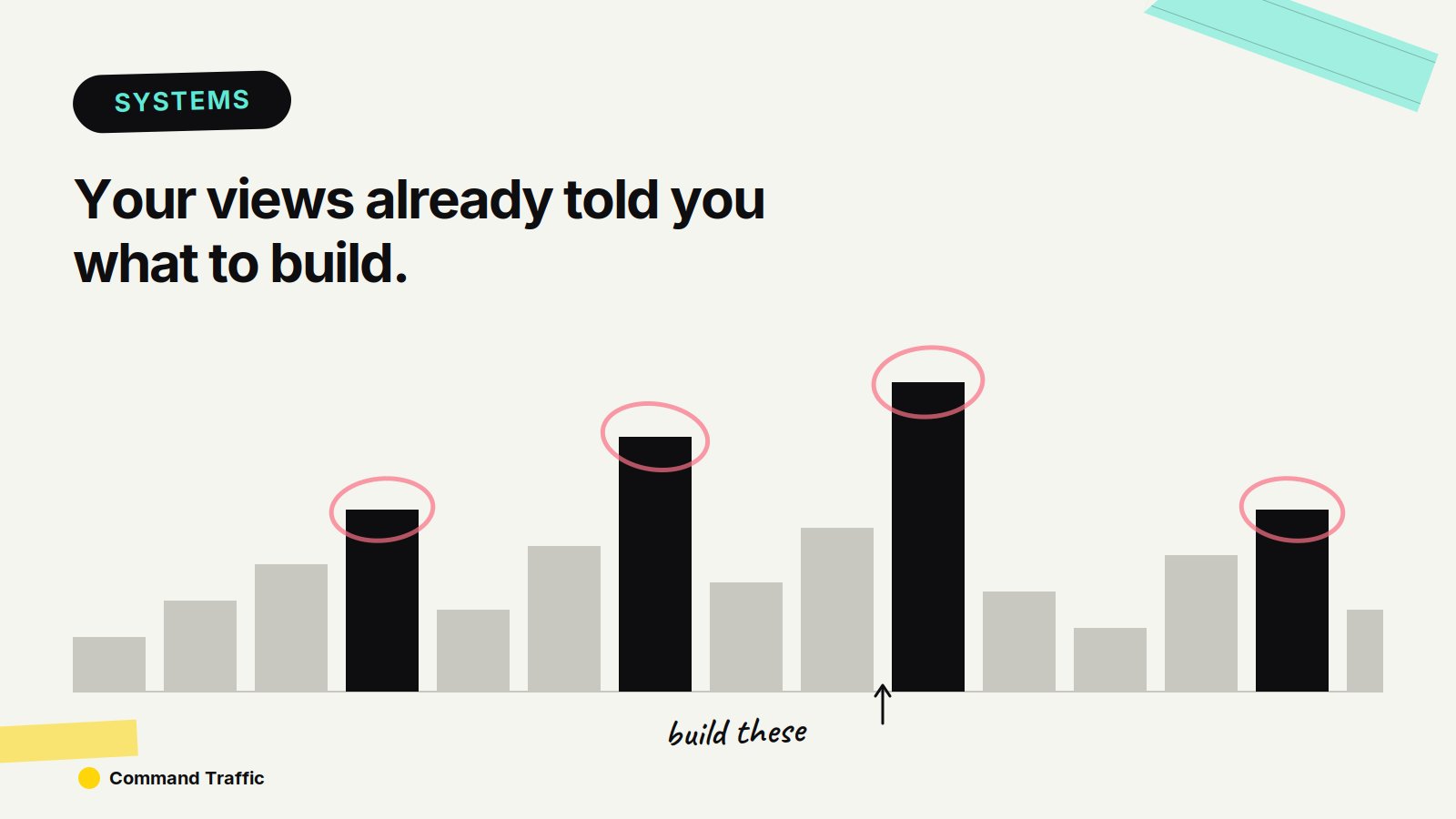
Most people think creating a digital product means filming, editing, or weeks of work. It doesn’t. What it actually requires is starting in the right place — not inventing an idea from scratch, but starting with something that already exists and already works.
A YouTube video in your niche that people have watched, engaged with, and cared about is the cleanest source material there is. Turn it into a structured written guide, and within a short window you’re holding something that can stand on its own.
Step 1: Borrow Demand Instead of Inventing It
When you build a product from an existing video, you aren’t guessing what people want. You’re borrowing demand. That video already answered a question people were searching for, and its engagement proved interest existed before you ever touched it.
The fastest way to do this is LoudAF’s Article Engine. Drop in a YouTube URL and it produces a structured, SEO-ready guide in your voice — sections, examples, action steps, the whole framework. From the same source material, LoudAF can also produce a carousel, a thread, an email sequence, or a long-form newsletter. One video becomes a small product, plus all the content you need to sell it.
Step 2: Ship It as a Probe, Not a Product
This is where the shift happens. The moment you sell something like this — even at $27 — you stop creating and start testing. Not opinions. Not feedback. Behavior. Clicks, opt-ins, and purchases give you information that comments never will, and they do it fast.
Most people don’t realize they crossed that line. They launch, post it, wait — and if it doesn’t sell immediately, they assume the idea failed. In reality, they never tested distribution or gave the signal time to form. The signal needs a real funnel to surface against.
BuildWithOS handles the testing infrastructure — landing page, checkout, email capture, follow-up sequence, and the analytics layer that tells you whether people clicked, converted, or bounced. You build the probe page once, swap the product, and run the same test repeatedly with different source videos. That’s how you turn one experiment into a system.
Build your product testing funnel with BuildWithOS →Step 3: Read the Signal Honestly
Speed is what makes this approach deceptively dangerous. When products are quick to create, it’s easy to misread early data, get emotionally attached, or abandon ideas too early.
A $27 product that costs more to sell isn’t a failure. It’s proof. Someone paid. The idea resonated. That’s the moment creation stops being the work and optimization begins. Now the questions stop being about tools and prompts — they become about judgment. What should you test next? How long should you run it? When do you iterate, and when do you move on?
The Real Lesson
The advantage of this approach isn’t that you can make one product quickly. It’s that you can repeat the process without guessing.
Knowing what to package, how far to take it, and when to move on means each test builds on the last instead of resetting momentum. Creation feels safe. Selling feels exposing. But selling is the part that tells the truth — free engagement can lie, sales don’t. In this context, selling isn’t aggressive. It’s diagnostic.